
Healthcare is entering a super-cycle – from $23 trillion today, global spend will hit $29.4 trillion by 2030, matching the GDP of the US economy today. Converging forces – ageing populations, emerging-market demand, and breakthroughs in AI, obesity drugs, and precision medicine – are rewriting healthcare’s rules. This is no longer a defensive sector of hospitals and drugmakers – it is a growth engine where data, science, and capital converge to create extraordinary commercial opportunities. Obesity medicines alone could be a $95 billion market by 2030, AI may unlock $868 billion in annual productivity gains, and precision medicine is set to double to $1.3 trillion by 2034.
This report distils the opportunity into five investable themes:
- Artificial intelligence and data – From drug discovery to hospital workflows, AI is compressing timelines and cutting costs.
- Obesity – A $95 billion market by 2030, obesity drugs are transforming patient outcomes and creating ripple effects across insurers, devices, and diagnostics.
- Precision and personalised medicine – Genomics, cell and gene therapies, and specialist outsourcing are powering a $1.3 trillion market by 2034 – the “picks and shovels” of the next healthcare frontier.
- Healthcare delivery transformation – Shifts to outpatient, home-based care, and specialty pharmacies are reshaping cost structures.
- Private markets and infrastructure – With $115 billion of private equity deals in 2024, capital is flowing into labs, clinics, and biomanufacturing – turning healthcare into a structural allocation in alternatives.
We frame these opportunities through our Valuation versus Growth Matrix – Stable Growth Leaders, Explosive Opportunities, Value Recovery Plays, and Value Traps – and examine access routes across public equities, private equity, infrastructure, and structured products. Together, these insights form a once-in-a-generation playbook for allocating to a $30 trillion sector at the heart of global growth.
What are the macro drivers?
Healthcare is one of the largest and most resilient segments of the global economy, driven by ageing populations, rising chronic disease, emerging-market demand and steady innovation:
- Demographics: the ageing world – By 2050, 2 billion people will be over 60, and the over-80 population will more than triple. Older patients consume far more care: those over 65 typically spend 3–5× more annually than those in mid-life. Japan already has ~30% of its population over 65; South Korea is on course to approach 25–30% by 2030.
- System strain: labour shortages and costs – McKinsey projects a global shortfall of ~10 million healthcare workers by 2030. At the same time, healthcare costs in developed markets have been rising ~2–3 percentage points faster than general inflation, straining public budgets and private insurers. The push toward outpatient care, digital health and AI-enabled productivity stems directly from this pressure.
- Emerging markets: scale and convergence – Rising incomes, insurance coverage and urbanisation are creating vast new patient cohorts. Emerging markets are expected to account for over one-third of incremental global healthcare spend between 2025 and 2030. China’s market is estimated to roughly double – from about $1.4 trillion to ~$2.8 trillion by 2030; India faces a potential 100 million diabetes cases by 2040. Many emerging markets still spend just 4–6% of GDP on health (vs 10–12% in the US/EU), leaving significant catch-up potential.
- Regulatory clarity: new rules for a new era – In the US, the FDA aims to streamline model evaluation and shorten review cycles, while the Inflation Reduction Act is reshaping drug-pricing economics. Europe’s EU AI Act – the first comprehensive AI law – provides a harmonised framework likely to accelerate adoption in trials, diagnostics and care delivery.
- Capital dynamics: private markets step in – Healthcare’s capital needs are vast: global R&D spending alone exceeds $200 billion annually, before facilities, digital platforms and service networks. Public markets cannot cover this. In 2024, healthcare PE deals totalled $115 billion (the second highest ever). With public R&D budgets flat and pharma reinvestment rates drifting lower, private capital is filling an annual financing gap on the order of tens of billions of dollars.
The case to allocate to healthcare is clear – the next step is precise targeting of the right sub-themes. This table links the macro drivers with the key investment themes:
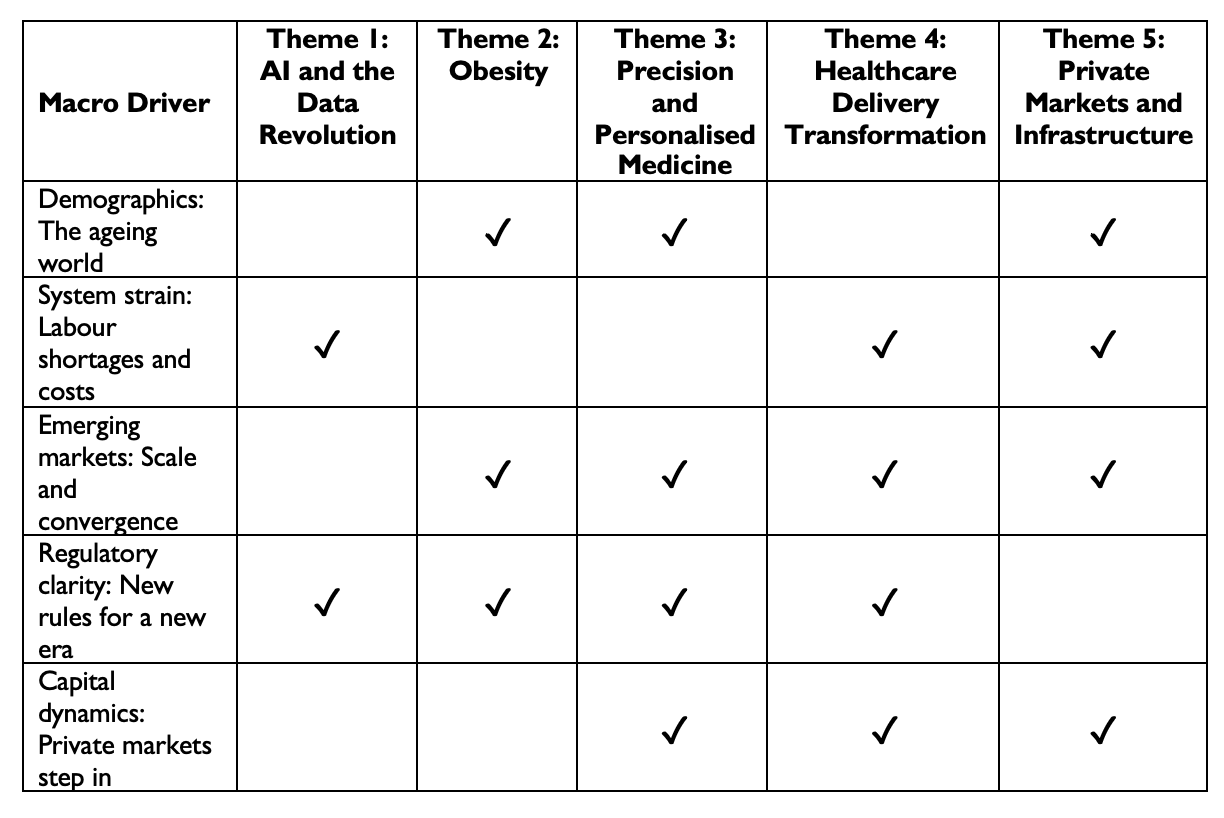
Figure 1: The link between macro drivers and investment themes
Theme 1: Artificial intelligence and the data revolution
AI now underpins every stage of healthcare – from lab research to hospital hallways – unlocking multi-billion-dollar productivity gains and faster cures. Two investment tracks stand out: high-risk moonshot platforms that aim to reinvent drug discovery, and proven workflow tools already embedded in hospitals and insurers with recurring revenues.
AI in drug discovery
Why it matters: Drug development is slow, costly and failure prone. It typically takes 10–15 years and more than $2 billion to bring one new therapy to market, with most candidates failing. AI changes that equation by testing virtual molecules, predicting how they’ll behave in the body, and prioritising the best options before expensive lab work begins.
- Analysts estimate AI-enabled discovery could unlock a $250 billion value opportunity over the next decade.
- Early development cycles can be shortened by ~40–60%, raising the odds of success.
- By 2024, over 40% of new small-molecule projects had AI involvement at some stage.
Investment opportunity: Companies like Recursion and Exscientia partner with major drug companies, but outcomes are inherently binary and take time. Consider building small satellite positions sized to catalysts (first-in-human, proof-of-concept, partner milestones).
AI in clinical trials
Why it matters: Clinical trials are the most expensive bottleneck – often exceeding $1 billion per programme. Every month saved brings revenue forward and reduces risk.
- A global survey found AI delivers ~18% faster trial tasks (patient matching, site selection, protocol design).
- Regulators are enabling adoption: in 2025 the US FDA introduced an AI pathway to support safe use of AI in monitoring and real-world evidence.
Investment opportunity: This is a service-driven, contract-based market with steadier revenues than single-asset drug bets. Scaled providers and development manufacturers that embed AI into their toolchains should see stickier, multi-year contracts and margin benefits.
AI in care delivery
Why it matters: Health systems face a projected 10 million worker shortfall by 2030 alongside rising costs and clinician burnout. AI is the most credible lever to lift productivity at scale.
- PwC estimates ~$868 billion in annual productivity gains by 2030 from operational AI.
- AI “scribes” that draft clinical notes from conversations cut paperwork time by 50–70%, freeing doctors to see more patients.
- Diagnostic AI is mainstream: 500+ FDA-cleared algorithms now assist radiology and cardiology. Companies like iCAD help detect disease faster and more accurately.
Investment opportunity: Workflow AI is the cash-generative core of the theme: regulatory-cleared software, subscription pricing, deep integrations into hospital IT (high switching costs).
Key takeaway
Build core exposure to workflow AI – the practical, revenue-generating engine of the theme – and add small, disciplined satellite allocations to select moonshot discovery platforms around dated catalysts. This barbell captures near-term cash flows and long-term optionality while keeping risk in check.
Theme 2: Obesity
Obesity’s explosive growth translates into a significant investment opportunity. The World Health Organization estimates global obesity rates have tripled since 1975, with over 650 million adults now obese and more than 1.9 billion overweight. In the US, more than 40% of adults are obese. Yet treatment penetration is tiny: only around 2% of eligible patients globally are receiving drug therapy. This leaves enormous headroom for growth as awareness, reimbursement, and product supply improve. Goldman Sachs projects a $95 billion market for anti-obesity medicines by 2030, putting this therapeutic area on par with oncology or diabetes in commercial scale. Two investment tracks stand out:
- Market leaders today – injectable GLP-1 drugs from Novo Nordisk and Eli Lilly.
- Pipeline disruptors – oral GLP-1 pills and next-generation agents that could massively expand adoption.
There are also ripple effects across the wider ecosystem – devices, diagnostics, and insurers adjusting to the new obesity paradigm.
The current leaders: Injectable GLP-1s
The market today is dominated by two companies:
- Novo Nordisk (Wegovy, Ozempic)
- Eli Lilly (Mounjaro, Zepbound)
These injectables deliver double-digit weight loss in clinical trials and are transforming patient outcomes. Supply shortages persisted through 2023–24, underscoring entrenched demand. Both firms are building out global manufacturing capacity to meet it. For investors, these incumbents offer high-visibility growth: billions in annual revenues, expanding reimbursement coverage, and pipelines that reinforce their positions. Valuations diverge: Eli Lilly at ~33× forward earnings vs. Novo Nordisk at ~12–15×, offering two different entry points. As scaled, cash-generative franchises, these are the Stable Growth Leaders of the obesity theme.
The pipeline: Oral GLP-1s and next-gen agents
Many patients prefer pills to injections; effective oral options could multiply uptake by making treatment as simple as a daily tablet. That’s why the next wave is focused on oral delivery and next-generation incretin biology. Eli Lilly and Novo Nordisk are the market leaders at scaling injectable GLP-1 franchises and with their ongoing research and development pipeline will likely remain significant in the oral GLP-1 market. Alongside their franchise, there are challengers offering purer plays and innovative technology in various areas – the table offers an overview of these:
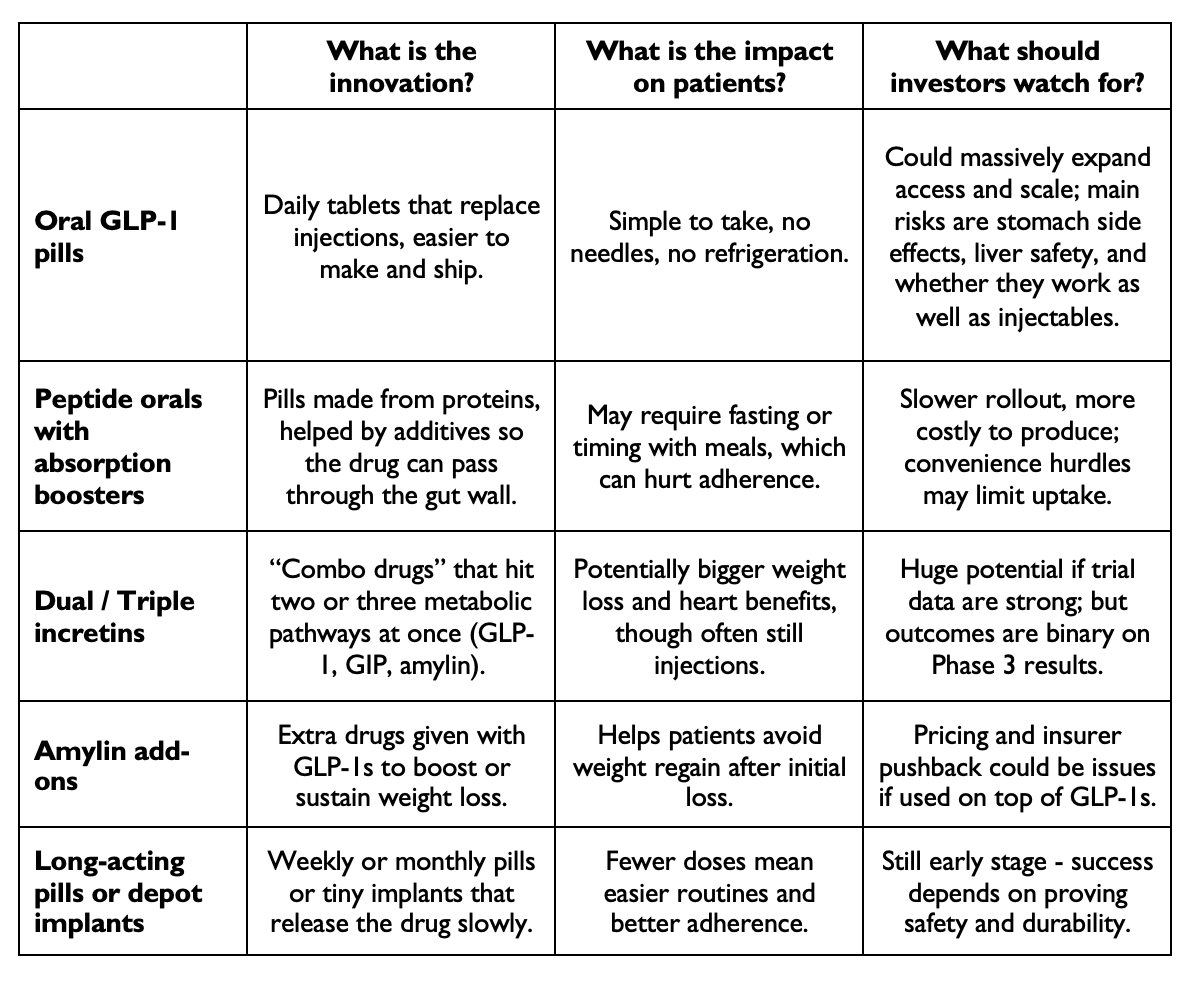
Figure 2: Pipeline and impact of obesity innovations
In assessing the landscape, it is critical to watch for the following:
- Late-stage readouts across oral small molecules and peptide orals during H2 2025.
- US/EU filings in 2026, followed by reimbursement decisions and real-world adherence data.
- Manufacturing scale-up and supply reliability as programs move from trials to launch.
These platforms can dramatically expand the addressable market – but outcomes are binary: efficacy vs injectables, safety/tolerability, pricing, and payer coverage will determine commercial scale. Positioning should be small and catalyst-led, sized for volatility.
Ripple effects in the ecosystem: devices, diagnostics, insurers
The obesity drug revolution is reshaping the broader healthcare system:
- Devices – sleep apnoea machines and bariatric surgery equipment may see reduced demand as drug therapy substitutes for hardware.
- Diagnostics – greater demand for metabolic testing and monitoring tools as treatment expands.
- Insurers – covering drugs costing ~$1,000/month per patient is a near-term burden, but long-term savings from fewer complications are compelling. Insurers are piloting obesity management programmes to balance cost and benefit.
These ripple effects will create winners and losers. Careful assessment is needed to identify the clear beneficiaries.
Key takeaway
Anchor in the scalable injectable leaders for stable, double-digit growth. Add small, catalyst-driven stakes in oral GLP-1s around key data readouts and selectively participate in ecosystem plays where there is clear beneficiary logic.
Theme 3: Precision and personalised medicine
Precision medicine’s rapid ascent – from a niche promise to a $1.3 trillion market by 2034 – offers superior patient outcomes and compelling investment returns. By tailoring therapies to an individual’s biology, clinicians can improve efficacy, reduce side effects and lower lifetime costs. For investors, this is one of the fastest-growing frontiers in healthcare. The key benefits are:
- Collapsing genome sequencing costs – from ~$100m in 2003 to <$1,000 today.
- Breakthrough cell and gene therapies – potential one-time cures for rare and chronic disease.
- Data platforms and manufacturing capacity – the engine room enabling personalised therapies at scale.
This market is forecast to grow from $650 billion to $1.3 trillion by 2034, a ~8% compound annual growth rate (CAGR).
Genomics and sequencing
Why it matters: Sequencing unlocks earlier diagnosis, risk prediction and targeted treatment. It underpins the entire precision medicine stack.
- Costs have fallen by >99.9%, enabling population-scale programmes.
- Real-world adoption: national pilots (e.g., the UK’s Genetics of Mortality in Critical Care programme which examines the causes of critical illness) validate early-detection and risk-stratification use cases.
- Leaders include Illumina and Pacific Biosciences.
Investment opportunity: Pioneers they may be, but with demanding valuations and uneven profitability, these names can carry considerable risk until margins improve, and scale is demonstrated.
Cell and gene therapies
Why it matters: These treatments can reset or cure disease biology – transformational for patients and systems.
- Market expected to grow from ~$25 billion to ~ $117 billion by 2030 (~18.7% CAGR).
- Examples include Bluebird Bio (gene therapies) and Novartis (CAR-T, personalised cancer treatment that uses a patient’s own immune system to fight their disease).
Investment opportunity: Even after FDA approval, pricing and reimbursement remain critical execution risks. At $1–2m per dose, payers are testing outcome-based reimbursement. These opportunities have high potential, but binary based on trial outcomes/approval and dependent on payer decisions.
Data platforms and infrastructure
Why it matters: Personalised medicine only works with robust data and reliable manufacturing.
- Contract Development and Manufacturing Organisations such as Lonza and Catalent are the “picks and shovels,” providing development and production capacity to large pharmaceutical companies
- Their multi-year contracts create predictable revenues, often growing 15–20%. Once contracted, switching costs and re-audits make churn unlikely.
- On the data side, platforms like Invitae enable large-scale genetic insights that inform trial design and targeted drug development.
Investment opportunity: This is the most investable opportunity today – there are established companies with recurring revenues, regulatory moats, and embedded roles in the supply chain.
Key takeaway
Core exposure should focus on picks-and-shovels infrastructure – Contract Development and Manufacturing Organisations and data platforms – for stable, double-digit growth. Satellite positions could back breakthrough cell and gene innovators around trial and reimbursement inflection points, while avoiding high-multiple pure-play genomics until profitability/certainty improves.
Theme 4: Healthcare delivery transformation
Shifting care out of hospitals into lower-cost, tech-enabled settings is unlocking new growth and defensive opportunities – outpatient, home care, specialty pharmacy, and digital health. Rising costs, patient preference for convenience, and payer incentives are all accelerating this structural shift:
- Hospitals are high-cost, capacity-constrained, and increasingly pressured.
- McKinsey finds moving procedures to ambulatory surgery centres can cut costs by 30–40%.
- Patients are voting with their feet: 70% say they would choose home-based care if outcomes are equivalent.
For investors, these trends create durable mid-teens return opportunities in infrastructure and distribution, with selective upside in technology-enabled models.
The shift to outpatient and home care
Why it matters: The move from acute hospitals to outpatient and home-based settings is accelerating.
- The mobile surgery centre market is worth ~$100 billion today and growing 6–8% CAGR.
- Examples include DaVita (dialysis), UnitedHealth’s OptumCare (outpatient clinics), and Acadia Healthcare, which has expanded into outpatient behavioural health.
- Cost advantages are compelling: outpatient knee replacement is typically 30–40% cheaper than a hospital equivalent.
Investment opportunity: Outpatient and home-care infrastructure provide steady, defensive growth with solid double digit return potential.
Speciality pharmacies
Why it matters: Speciality pharmacies distribute complex drugs such as biologics and GLP-1s, requiring cold-chain logistics, patient adherence support, and payer integration.
- According to McKinsey, the sector is expected to grow at ~8% CAGR to 2028.
- Speciality scripts generate gross margins of 15–20%, well above retail pharmacy.
- CVS Specialty is a market leader, trading at a reasonable multiple of earnings with stable cash flows.
Investment opportunity: The speciality pharmacy market is scale driven with high barriers to entry and strong recurring revenues.
Digital health and remote monitoring
Why it matters: The pandemic demonstrated the potential of telehealth and remote monitoring, but valuations collapsed when consumer demand normalised.
- Winners: BrightHealth and Amwell have pivoted to enterprise SaaS-style (software as a services) contracts with hospitals and payers, improving unit economics.
- Laggards: Many consumer-facing apps remain unprofitable and trade at <5× sales, reflecting execution challenges.
- India’s telehealth market grew ~150% year-on-year in 2024, led by Practo and 1mg – proof of international scaling potential.1
Investment opportunity: Identify digital health firms with proven profitability and embedded enterprise contracts.
Key takeaway
Allocate to outpatient and home-care infrastructure and specialty pharmacy for steady returns. Only back digital health names with proven profitability and enterprise contracts – avoiding hype-driven opportunities.
Theme 5: Private markets and infrastructure
Private markets are increasingly where the most compelling healthcare opportunities reside – $115 billion of healthcare private equity deals closed in 2024, the second-highest year on record. Even in a higher-rate environment, investors are allocating to healthcare for its combination of growth, resilience, and uncorrelated returns:
- Healthcare’s capital needs are enormous. From new therapies and clinical services to infrastructure and digital platforms, the sector requires long-term investment – and public markets alone cannot fund it. Global healthcare research and development spending exceeds $200 billion annually, on top of multi-billion dollar requirements for clinical networks, data platforms, and biomanufacturing capacity. Private capital fills the gap, providing both funding and operational expertise.
- According to Bain, healthcare private equity deal value reached $115 billion in 2024, defying broader merger and acquisition slowdowns.
- Healthcare real estate yields of 5–7% provide defensive, inflation-linked cash flows.
- For wealthy investors, private markets offer access to opportunities often unavailable in listed equities.
Private equity deal flow
Why it matters: Deal activity remains robust across biopharma services, medtech, healthcare IT, and provider services.
- Five $5 billion+ mega-deals closed in 2024, including clinical trial IT infrastructure and consumer health carve-outs.
- Regional mix: 65% North America, 22% Europe, 12% Asia-Pacific.
- Subsector focus: contract research, specialty provider roll-ups, medtech supply chains, and digital health infrastructure.
Investment opportunity: Resilient, often recurring-revenue businesses benefiting from long-term secular demand.
Mid-market has quietly outperformed
Why it matters: While mega-deals attract headlines, the mid-market has quietly outperformed. Funds with $500m–$4 billion of capital have raised 40% more since 2022 than in the prior three years. Strategies include:
- Carve-outs of non-core healthcare divisions from large corporates.
- Tuck-in acquisitions to build regional or specialist scale.
- Example: roll-ups in specialty pharmacy distribution and outpatient services.
Investment opportunity: Mid-market deals are easier to finance, integrate, and scale – attractive entry points with lower execution risk than mega-deals.
Infrastructure and real estate
Why it matters: Healthcare infrastructure is emerging as a distinct asset class:
- Life sciences labs and biomanufacturing facilities are in structural shortage. Examples include Thermo Fisher’s pharma services joint ventures, which add capacity for biologics and advanced therapies and are typically let on long, sticky contracts.
- Outpatient centres and ambulatory clinics generate steady rents linked to insured demand.
- Real estate yields are typically 5–7%, often inflation-linked.
Investment opportunity: Real estate/infrastructure funds and REITs are expanding their healthcare holdings. These are stable, yield-driven assets that also deliver exposure to healthcare growth.
Key takeaway
Allocate to private markets via specialist healthcare PE and infrastructure funds, anchored in mid-market strategies and healthcare real estate for stable 5–7% yields and mid-teens internal rates of return. As a satellite, selectively participate in mega-deals or carve-outs in high-growth areas such as healthcare IT and specialty services. Overall, healthcare private markets are now a structural allocation – offering diversification, inflation protection, and exposure to one of the most resilient growth sectors of the global economy.
Valuation versus growth: how to think about healthcare investing
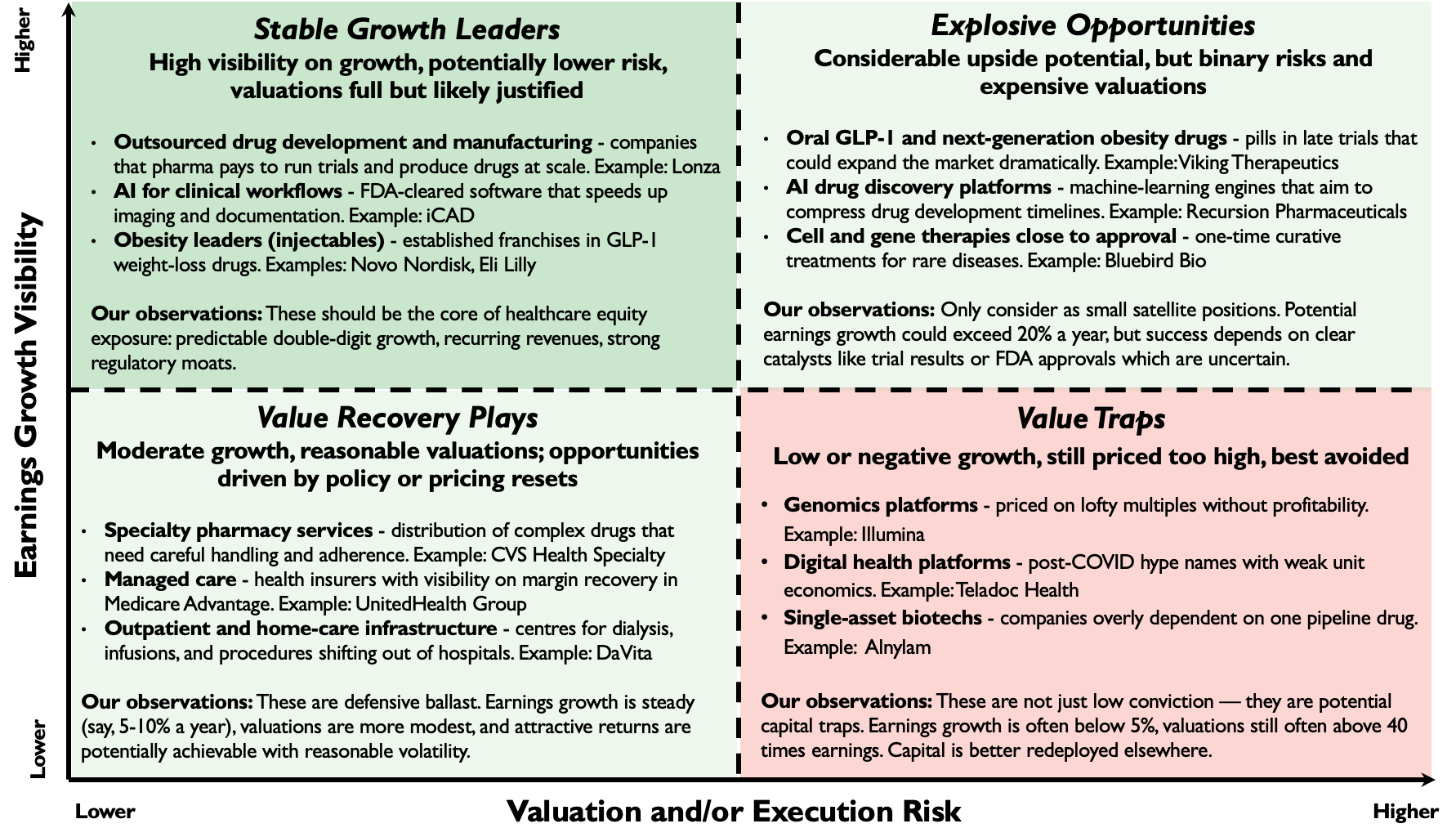
Healthcare is set to grow to nearly $30 trillion by 2030. But it is not a single opportunity set. Beneath the surface are very different types of businesses – some with predictable, recurring revenues; others with extraordinary promise but binary risks; some that look cheap and set for recovery; and others that remain overhyped and overpriced. For investors, the challenge is not just finding growth but ensuring that growth is investable at the right price and risk profile. To bring this into focus, we map healthcare subsectors into quadrants:
- The Y-axis captures earnings growth visibility – how predictable a company’s revenues and profits are, based on regulatory approvals, payer adoption, and recurring demand. For example, outsourced drug manufacturing firms often sign multi-year contracts that provide high visibility.
- The X-axis captures valuation and execution risk – whether current market multiples are justified and how much depends on risky outcomes like trial readouts or reimbursement changes. In recent years, some digital health platforms traded above 40× earnings despite weak profitability – a clear example of high valuation and high execution risk.
This approach divides the healthcare universe into four clear quadrants:
- Stable Growth Leaders – the core. Predictable double-digit growth, recurring revenues, strong regulatory moats.
- Explosive Opportunities – high-risk, high-reward subsectors where growth could exceed 20% a year but depends on binary catalysts.
- Value Recovery Plays – moderate growth but modest valuations, with upside driven by policy or pricing resets.
- Value Traps – businesses with weak growth yet still priced expensively; better to redeploy capital elsewhere
By classifying healthcare this way, investors can deliberately balance portfolios: anchoring in stable leaders, taking selective satellites in explosive areas, using recovery plays as ballast, and avoiding traps. The chart that follows shows where today’s key subsectors – from obesity drugs to AI platforms to specialty pharmacy – sit within this framework.
Portfolio construction, asset allocation and risk management
Healthcare is not just a story of powerful macro drivers and attractive themes. For wealthy investors, the question is how best to allocate capital: capturing long-duration growth while managing volatility, liquidity, and concentration risk. The options span direct public equities, specialist funds, private equity, infrastructure, and structured products.
Public Equities: Direct Exposure and Specialist Funds
Public markets remain the most straightforward entry point. Core holdings in scaled, cash-generative leaders – most notably the obesity franchises of Novo Nordisk and Eli Lilly – should anchor any allocation. Around these, investors can add satellite positions in subsectors such as oral GLP-1s, AI-driven discovery, or cell and gene therapies. Given their binary risks, these positions should be sized carefully and tied to specific catalysts.
For those seeking professional selection and diversification, specialist managers have built long track records in healthcare. Firms such as Wellington Management and T. Rowe Price have run dedicated health sciences funds for decades, typically holding a balanced mix of large-cap pharma, medtech, and emerging innovation. More focused houses like Polar Capital and Bellevue Asset Management offer global healthcare strategies that explicitly separate “core” defensive holdings from higher-growth themes – a structure aligned with the Stable Leaders and Explosive Opportunities framework above. These funds provide broad exposure with lower single-stock risk and access to IPOs and secondaries that are hard for individuals to reach.
Private markets and infrastructure
Private markets are a vital engine of healthcare growth, with $115 billion of deals in 2024, the second-highest year on record. Global platforms such as Bain Capital, Blackstone, TPG, KKR, Carlyle, and General Atlantic, alongside specialists like OrbiMed Advisors, dominate deal flow across providers, services, and life sciences infrastructure. Their focus is on scalable “picks and shovels” subsectors – clinical services, contract manufacturing, outpatient networks, and medtech supply chains. European investors such as Ardian and Partners Group have also built strong franchises in healthcare carve-outs and infrastructure. For wealthy investors, these managers provide access to mid-market strategies that have historically delivered mid-teens internal rates of return, although with the trade-off of illiquidity.
Infrastructure and real estate are an increasingly important component. Life sciences labs, outpatient centres, and biomanufacturing facilities generate yields of 5–7% with inflation linkage, underpinned by insured demand and long leases. These assets provide defensive ballast and income, complementing higher-growth equity allocations.
Structured products
Structured products can tailor exposure to healthcare subsectors in line with investor preferences. Capital-protected notes allow participation in upside from equity baskets (AI, obesity leaders) with downside buffers, while yield-enhanced notes or reverse convertibles can monetise volatility in biotech. These solutions help smooth returns while maintaining thematic exposure.
Putting it together in a portfolio context
A resilient healthcare allocation should resemble a barbell. At one end, a core of stable leaders, specialist equity funds, and infrastructure yielding 5–7%. At the other, smaller, catalyst-driven allocations to innovation themes such as oral GLP-1s, AI discovery, and cell and gene therapies. Anchoring the portfolio are private equity and real assets, which add diversification and steady compounding, while structured products provide flexibility to tailor risk and return. Equally important is the discipline to avoid Value Traps – overvalued genomics platforms, unprofitable consumer digital health models, or single-asset biotechs without pipeline depth. Policy and currency risks, especially in emerging markets, are best managed through specialist funds or global leaders with diversified operations.
The result is a portfolio that combines stable compounding, selective innovation exposure, and downside protection – capturing healthcare’s $30 trillion growth opportunity with discipline. At InCred, we have analysed and selected a range of healthcare opportunities – including stable leaders, access to leading funds and opportunities linked to the innovation themes. We maintain a strong awareness of the Value Traps and the sub-sectors and companies to avoid. We will work with you to create healthcare exposure that complements your overall asset allocation, portfolio construction and time horizon.
About the author
Nick Perryman is Vice Chairman at InCred Global Wealth Limited and Chairman of its Investment Committee. He has over 25 years of investment and wealth management experience, holds advanced qualifications in investment management, financial planning and psychology, and was previously a managing director at UBS where he was head of its international wealth management business in London, and before that head of investment products and services. He is a doctoral researcher at Durham University and an honorary fellow of Royal Holloway, University of London. He is co-author of the book, “Leadership in Wealth: Mastering the opportunities of wealth in your family, firm and society”.
Sources
Bain & Company (2025) Global healthcare private equity report 2025. Bain & Company, Inc.
Bekbolatova, M., Mayer, J., Ong, C.W. and Toma, M. (2024) ‘Transformative potential of AI in healthcare: definitions, applications, and navigating the ethical landscape and public perspectives’, Healthcare, 12(2), p. 125.
Economist Impact (2024) Healthcare as an investment: Improving US health and economic vitality through effective spending. Economist Impact.
Goldberg, C.B., Adams, L., Blumenthal, D., Brennan, P.F., Brown, N., Butte, A.J., Cheatham, M., DeBronkart, D., Dixon, J., Drazen, J. and Evans, B.J. (2024) ‘To do no harm – and the most good – with AI in health care’, NEJM AI, 1(3), p. 2400036.
Goldman Sachs (2023) ABC of biotechnology. Goldman Sachs Global Investment Research.
Goldman Sachs (2025a) Biotech: Obesity evolution – digesting oral pill developments. Goldman Sachs Global Investment Research.
Goldman Sachs (2025b) Biotech: Obesity evolution – updating anti-obesity medication market model. Goldman Sachs Global Investment Research.
Goldman Sachs (2025c) Conversation with the FDA Commissioner: Americas healthcare takeaways. Goldman Sachs Global Investment Research.
Goldman Sachs (2025d) Conference wrap-up: Key themes and takeaways. Goldman Sachs Global Investment Research.
Goldman Sachs (2025e) European Medtech & Healthcare Services Conference – Key takeaways. Goldman Sachs Global Investment Research.
Goldman Sachs (2025g) Obesity evolution: Global healthcare pharmaceuticals update. Goldman Sachs Global Investment Research.
Goldman Sachs (2025i) What to expect in US healthcare in 2025 and beyond. Goldman Sachs Global Investment Research.
ICON plc (2024) Integrating AI into clinical research: How AI is being used to enhance clinical development. ICON plc.
Maleki Varnosfaderani, S. and Forouzanfar, M. (2024) ‘The role of AI in hospitals and clinics: transforming healthcare in the 21st century’, Bioengineering, 11(4), p. 337.
McKinsey & Company (data referenced in Goldman Sachs 2025i and other reports).
Morgan Stanley (2024) The long-term case for healthcare. Morgan Stanley Investment Management.
Panahi, O. (2025) ‘The future of healthcare: AI’, Public Health and the Digital Revolution. MediClin Case Reports Journal, 3(1), pp. 763–766.
Peng, Y., Malin, B.A., Rousseau, J.F., Wang, Y., Xu, Z., Xu, X., Weng, C. and Bian, J. (2025) ‘From GPT to DeepSeek: Significant gaps remain in realizing AI in healthcare’, Journal of Biomedical Informatics, 163, p. 104791.
PwC (2025) The promise of healthcare AI: Productivity and transformation in the sector. PwC.