
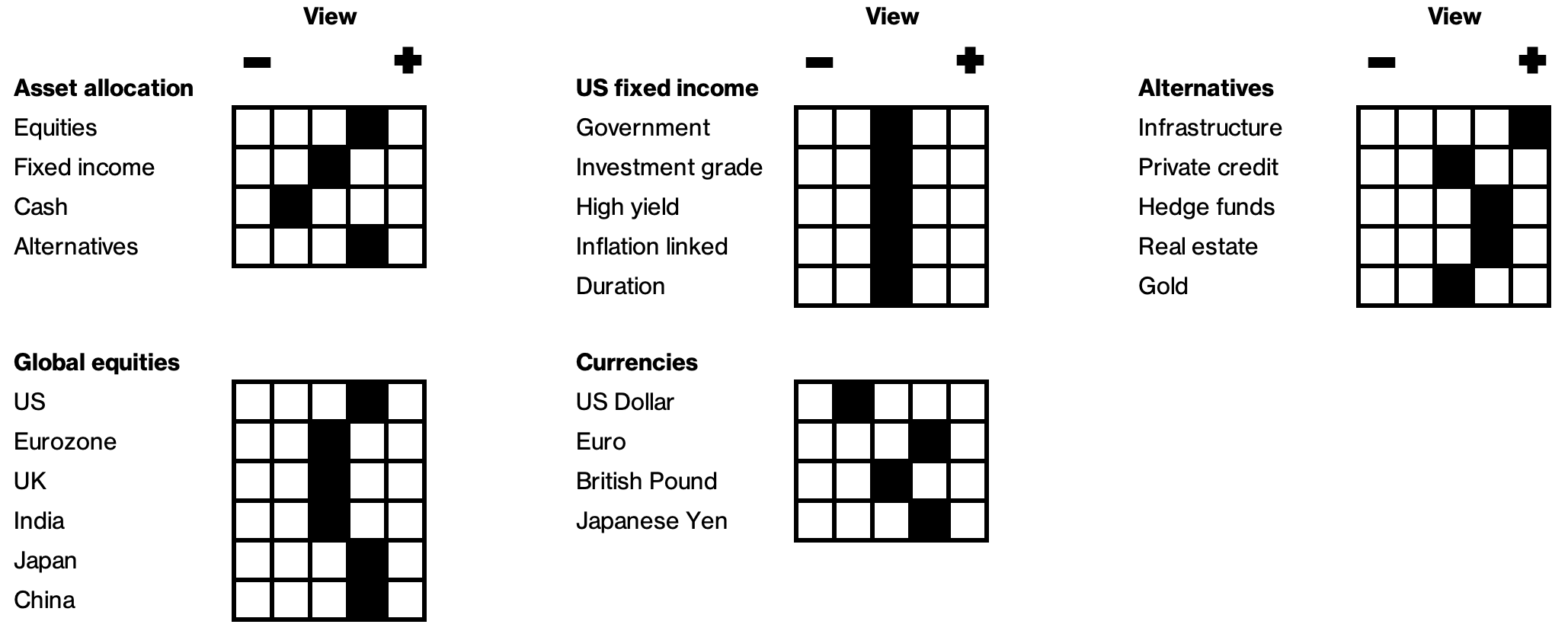
We are taking a more positive stance on global equities in the short term. The driver is simple: earnings and cash flow are doing the work – most clearly in the US, where our more positive stance on equities over the last month has been rewarded and the AI build-out is now spilling beyond mega-cap tech into semiconductors, software and power and data-centre ecosystems. That widening opportunity set gives us more ways to win than just the biggest names. We maintain our positive stance on Japan, where corporate reform and rising payouts are lifting shareholder returns. And China is a tactical bright spot: targeted policy support and very low starting valuations create scope for a selective catch-up. Across these pillars our approach is consistent – back quality balance sheets and visible earnings, lean into productivity and AI-infrastructure themes, and use pullbacks to add to positions.
United States: Firmer profits, softer landing
The US economy is cooling without cracking: hiring and wage growth have eased from 2024 peaks, but real incomes and services demand remain supportive. Inflation has moderated enough for the Fed to pivot toward easing rates. With this backdrop, we expect earnings – more than increasing multiples – to do the heavy lifting for returns, which aligns with the more positive stance on US equities we adopted in October.
Q3 strengthened the case for US equities. With the majority of the S&P 500 reported, companies delivered earnings growth of about 11.8% year on year – the fourth straight quarter of earnings expansion – while revenues grew around 8%, with technology leading outperformance. A broad 83% of reporting companies came in ahead of earnings expectations and approximately 65% topped revenue forecasts, and the index’s blended net profit margin held around 12.8%, above its five-year average for a sixth consecutive quarter. Leadership still included the mega-cap platforms, but gains were not confined to them: eight of eleven sectors showed year-on-year profit growth, and forward estimates have nudged higher as guidance lands. In plain terms, cash flows are expanding, and breadth is edging wider – exactly the mix that lets growing earnings carry returns.
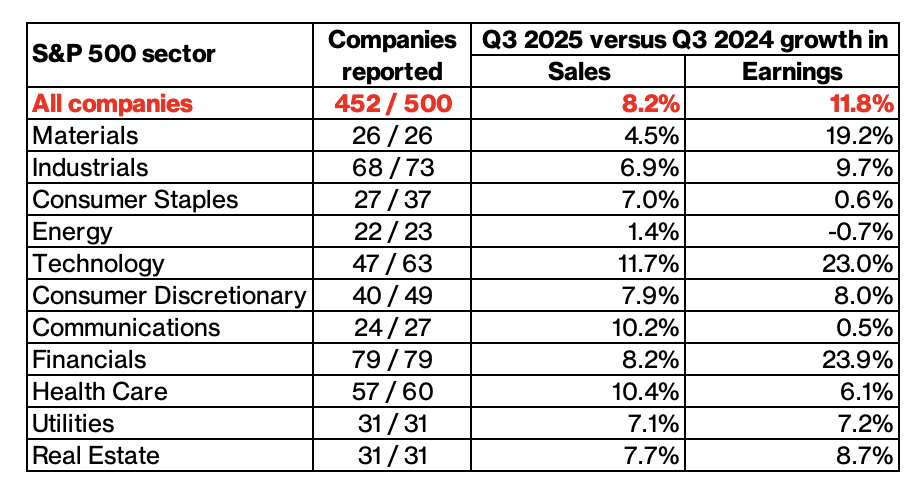 Figure 1: Q3 2025 sales and earnings growth versus Q3 2024 in S&P 500 as at 7 November 2025
A constructive shift is the widening profit pool associated with AI infrastructure. The beneficiaries are now visible beyond semi-conductor and cloud computing companies – reaching power generation, grid reinforcement, advanced cooling and data-centre real estate. Select industrials and utilities are seeing healthier order books and capex pipelines, while parts of healthcare and software are benefiting from productivity and automation spend.As for the broader economic picture, US households are no longer spending from pandemic cash reserves, but day-to-day demand is still supported by wages that are holding up in real terms and by credit that remains available, if a touch tighter. The best real-time read – card swipes and bookings – suggests stability: payments volumes are steady, and travel activity is normal, pointing to slower but still solid economic growth rather than a fresh boom. On the production side, factory surveys are mixed: goods exposed to weak global trade are softer, while areas linked to the energy system and the data-centre build-out are firm. Think power equipment, grid upgrades, transformers, generators, cooling and specialist construction – where order books look healthy. Put simply, the consumer is resilient, industry is stabilising in places, and inflation is easing. That is the definition of a soft landing – economic growth is cooling toward trend, a cause of cautious optimism.
What could upset the path?
In our opinion, there are three things to look out for:
- Trade policy and tariffs: these can lead to uncertainty and put pressure on margins in supply chains
- Interest rate expectations: if growth re-accelerates or inflation stalls, higher real yields could compress multiples even with stable corporate earnings.
- AI capex discipline and returns: the huge spend has been front-loaded – so if the ultimate returns on investment lag or access to capital tightens, this could impact valuations of key players.
The US remains the profit engine of equity markets globally. An economic soft-landing, a positive earnings cycle and a multi-year AI investment wave continue to underpin the case for US exposure. Our stance remains positive.
US fixed income
We are neutral across US fixed income and are letting carry do the work while the growth-inflation mix settles. The core of our positioning sits in the five to seven year part of the curve. For us, this is the sweet spot where income is competitive and interest rate risk is balanced. Shorter maturities lead to reinvestment risk in a volatile policy environment, whilst longer maturities are exposed to term-premium and supply dynamics. For investment grade, we see spreads as fair and focus on resilient balance sheets, avoiding the volatility of longer-dated maturities. In high yield, we look for quality and favour higher grade names where the risk of default is lower. We include inflation-linked as a targeted hedge against inflation surprises rather than a strategic overweight. When it comes to duration, we stay close to benchmark – centred on the intermediate maturities. Our stance is calm, non-heroic – earning the carry, maintaining liquidity and retaining room to pivot as the cycle clarifies.
Equity markets around the world: Asian ascent, European equilibrium
We stay positive on Japan. Three forces are working together: (1) corporate reform is lifting returns via buybacks, higher dividends and better balance-sheet discipline; (2) steady wage gains and mild inflation are supporting domestic demand after years of deflation; and (3) global investment in automation, semiconductors and power equipment plays to Japan’s industrial strengths. Valuations remain reasonable versus the US, with improving breadth beyond the biggest exporters. A weak yen boosts earnings in many global names. The key things to watch out for are any sharp yen rebound, shifts in Bank of Japan policy and global trade softness.
We are increasingly positive on China. This is on a tactical basis, driven by three near-term supports: (1) targeted policy easing and domestic stimulus that are beginning to stabilise activity; (2) very low starting valuations versus global peers; and (3) early signs of currency stabilisation that reduce a key headwind for foreign investors. Recent indicators point to a gradual rebound that could enable a valuation catch-up, particularly in areas linked to domestic demand, electrification, power grids and automation, alongside selected global exporters. We see the opportunity as time-bounded rather than structural: execution on housing measures, clarity on private-sector regulation and geopolitics will determine durability. Hence, we prefer high quality balance sheets and cash-generative franchises, with an eye on certain infrastructure and consumer platforms.
We maintain a full, neutral weighting in India. The long-term story is intact – strong domestic demand and ongoing public expenditure on capital projects supports productivity. Policy continuity post-election and steady bank balance sheets add resilience. The trade-off is valuation: many high-quality franchises already price in years of growth, and small/mid-cap pockets look stretched after a powerful run. Oil prices, the monsoon and rupee moves remain the main macro swing factors. Our approach is patient and selective: lean toward large-cap compounders in financials, consumer and infrastructure supply chains. Be cautious where earnings expectations are heroic and use volatility to add.
In Europe, we keep a neutral stance. The region looks steadier but not fast-growing. Inflation is easing and the European Central Bank is moving toward rate cuts, which helps financing costs; manufacturing remains soft. The latest reporting season was mixed: banks, consumer and industrial firms held up, while more economically sensitive sectors disappointed. Europe still trades at a discount to the US – however, with less exposure to high-growth tech, that discount may well persist. We focus on strong balance sheets, dependable dividends and companies tied to power grids, electrification and automation – beneficiaries of data centre and AI spending. Key risks are energy prices, policy and tariff noise. In the UK, valuations are low and dividend yields attractive, but the market’s heavy mix of energy, banks and defensives limits growth. Softer inflation and Bank of England rate cuts help cashflows, while sterling swings remain a driver. We favour quality balance sheets and global earners as domestic demand remains fragile.
Currencies: Dollar peaks, alternatives emerge
As the Fed shifts from restraint toward easing and US growth cools toward trend, the US dollar looks less dominant. We are less positive and would use moments of dollar strength to reduce or hedge exposure. That same backdrop is kinder to the euro, where a narrowing policy gap with the US, healthier external balances and reasonable starting valuations leave us more positive. In practice, we are comfortable leaving euro equity and credit exposure unhedged, so potential currency gains can contribute.
The British pound sits in the middle ground: the UK’s softer growth limits cyclical upside but credible policy and acceptable carry offset tail risks, so our stance is neutral. The yen is our preferred diversifier: ongoing policy normalisation and firmer domestic yields reduce structural pressure, and the yen typically strengthens when global risk appetite sours – exactly when dollar-based investors value ballast – so we are more positive there. Implementation stays simple – we favour natural under-hedging on euro and yen exposures to let appreciation work for you and use straightforward forwards or options to manage intermittent dollar spikes.
Alternative investments: Real assets, resilient returns
Private infrastructure is where macro need meets dependable cash flow. We are excited by assets that keep the modern economy running – power, data and digital connectivity – typically backed by long-term, often inflation-linked contracts and protected by high barriers to entry. Historically, the asset class has delivered c.9% annualised returns with bond-like volatility, low correlation to public markets and shallower drawdowns – patterns that held up in inflationary or recessionary episodes. Demand is only accelerating: the AI/data-centre build-out and grid modernisation point to $2tn+ of US investment this decade. In portfolios, we see private infrastructure as a resilient, income-rich anchor that also helps hedge inflation risk and diversify equity cyclicality.
In private real estate we stay constructive but selective, with clear regional tilts. In the US, the investment case is doing its own heavy lifting: rental housing benefits from stretched home-purchase affordability and a deepening supply shortfall, while re-industrialisation is creating multi-year demand for modern logistics and light-manufacturing space – two areas where cash-flow durability and pricing power look most resilient. In Europe, we favour managers concentrating on structurally advantaged segments – logistics, data centres/telecom-adjacent assets and broad residential – where occupier fundamentals are firm and asset quality can offset financing costs. Core-plus and real-estate debt strategies also merit attention as price discovery continues. In Asia, we prefer developed-market exposure with high transparency and deep tenant pools, leaning toward logistics networks serving e-commerce and diversified rental housing platforms. These sit neatly within the region’s broader earnings and policy backdrop that has been incrementally more supportive this year. Across regions, our focus remains on income growth from operational levers – lease-up, redevelopment, power upgrades – rather than cap-rate compression, and on managers able to capture AI- and electrification-driven power demand in “digital-adjacent” real assets.
We use hedge funds to smooth the ride and harvest steady, uncorrelated returns. We prefer managers who keep net market exposure low and earn their keep from mispricings, not big market calls. That points us to equity market-neutral and quality-biased long/short (back good businesses, short the weak), fixed-income relative value (pricing gaps along the curve, with rate risk tightly hedged), and selective credit long/short or special-situations where catalysts are clear. We also like disciplined multi-strategy platforms that can reallocate quickly as opportunities shift. Across styles we prize transparency, liquidity, tight drawdown control, sensible capacity and fees that reward realised – not paper – gains.
We maintain a neutral view on gold and keep a full strategic weighting. The case is balanced. On the one hand, gold remains a diversifier: it tends to hold value when growth scares or geopolitical shocks hit risk assets, and it is less correlated with equities and credit. Ongoing central bank buying and a plateauing US rate path are supportive, especially if real yields drift lower and the dollar softens. On the other hand, gold has no cash flow – if real yields back up or the dollar rallies, price gains can stall. In portfolios, we treat gold as insurance rather than a tactical trade.
Special focus on private credit: Skilled managers, strong covenants
The context
Private credit has been in the news over recent weeks with some commentators pointing to a potential bubble. Whilst we believe that the asset class remains a valuable return opportunity for US dollar investors, the risks require investors to be careful. Public market signals are clear: high-yield bond spreads are tight – around 300 basis points – so compensation for default risk is limited and leaves little margin for underwriting mistakes. For private loans to justify their premium, they must deliver through strong seniority, robust collateral and solid covenants, rather than simply offering a higher yield.
Recent signs of stress in less-transparent corners of the market – like trade receivables and some private deals – highlight that structures set up during the 2020–2022 capital surge can be weaker. As liquidity tightens, the weakest structures show strain first. This market phase is not seeing a systemic crisis, but there is a clear shift: from “deploy fast” to “structure smart.”
Major credit markets are not showing signs of deep trouble, with investment-grade and high-yield spreads historically tight. This stability in public markets means private credit managers must focus even more on thoughtful credit selection and strong downside protection to earn the illiquidity premium.
The macro backdrop calls for extra discipline. Leading indicators suggest slowing growth and more dispersion between winners and losers. In this part of the cycle, strong underwriting, careful documentation and effective workout skills make the difference – not broad market beta.
Why a disciplined approach is essential
Our approach favours senior-secured, asset-backed direct lending: tight covenants, shorter loan maturities, cash sweep protections and strong collateral. We will avoid “covenant-lite” and highly leveraged mezzanine deals until market conditions improve. With tight public spreads and late-cycle risks, the big differentiator will be loss severity – not just default rates. That is why we seek out managers with deep origination networks, experienced teams, robust documentation skills and in-house restructuring capacity.
Why choose large, established managers? They get first look at top deals, have the power to negotiate strong covenants, benefit from richer data and possess the legal and servicing muscle needed for enforcement and workouts. They can also diversify and pace their portfolios, reducing risk from any single vintage. The best managers find resilient cash flows and have the depth to protect them if conditions deteriorate.
For us, private credit remains attractive, but only with high-quality risk and seasoned managers proven at pricing, structuring and, crucially, fixing credit when needed. In today’s market, careful selection and monitoring is the only acceptable strategy.
Conclusion
The global investment landscape is defined by divergence. The US shows that a soft landing is achievable, with robust corporate earnings broadening beyond tech giants. Meanwhile, Asia offers targeted momentum through Japan’s reforms and China’s stimulus, while Europe provides steady, if unspectacular, equilibrium.
Our strategy is built to navigate these contrasts. We are capturing equity momentum where it is strongest – in quality US earnings and selective Asian opportunities – while using fixed income for steady carry and currencies for strategic diversification. In alternatives, we focus on real assets for resilient returns and insist on discipline in private credit.
This is not a time for broad, unthinking bets. It is a time for selectivity, focusing on quality balance sheets, visible cash flows and skilled managers. We remain positive on the pillars of growth but are vigilant of the risks. At InCred, we are here to support you in balancing the pursuit of momentum with a disciplined approach to risk, so you are positioned to both participate in the upside and weather the inevitable shifts ahead.
About the author
Nick Perryman is Vice Chairman at InCred Global Wealth Limited and Chairman of its Investment Committee. He has over 25 years of investment and wealth management experience, holds advanced qualifications in investment management, financial planning and psychology, and was previously a managing director at UBS where he was head of its international wealth management business in London, and before that head of investment products and services. He is a doctoral researcher at Durham University and an honorary fellow of Royal Holloway, University of London. He is co-author of the book, “Leadership in Wealth: Mastering the opportunities of wealth in your family, firm and society”.